
Executive Summary
Welcome to MENA Health!
Our website serves as a platform to present unique, thoroughly researched agricultural innovations grown right here on Ethiopian soil to promote a healthy lifestyle. Through four years of dedicated effort and research, BuraGudina Plc has successfully adapted international agricultural knowledge and plant varieties to our local soil and climate, successfully bringing these remarkable products to market.
1. MENA Tea — “Back to Default”
Let us return to our original, natural design.
MENA Tea is a unique herbal tea prepared from natural plant leaves originally introduced from Guatemala and extensively cultivated to adapt perfectly to Ethiopian environmental conditions.
Our Brand Philosophy: Our core philosophy is “Back to Default” (returning to our original, natural self). This concept is intended as a lifestyle and brand philosophy rather than a medical claim. It encourages individuals to lead a healthier, more balanced, and natural lifestyle through beverages sourced directly from nature. In another sense, returning to nature is a form of healing in itself.
Intellectual Property Rights: Because these plant leaves were developed and enhanced by Ethiopian experts, our product stands as a point of national pride, having been granted legal Intellectual Property Rights by the Ethiopian Intellectual Property Authority. In our understanding, many of our modern illnesses stem from dietary issues rooted in chemical fertilizers and weed-control chemicals sprayed directly onto crops!
2. MENA Chia Seed
Chia seed is a well-known superfood variety packed with exceptionally high nutritional value for the human body. Through trials conducted across various Ethiopian soil types over the past four years, our black chia seed has become fully adapted to our local soils. We are currently applying this exact same adaptation process to white chia seeds.
Local Production and Economic Benefits: This represents a massive agricultural milestone. By replacing imported chia seeds—which previously entered the domestic market entirely from abroad at a high foreign exchange cost—with locally produced alternatives (Import Substitution), we directly benefit local farmers and safeguard our national foreign currency reserves.
3. Quality & Safety
We place the highest priority on the quality of MENA products and the safety of our consumers. MENA Tea has undergone rigorous laboratory testing, yielding the following results:
It is certified completely free from harmful bacteria such as E. coli and Salmonella.
Laboratory testing has verified that heavy metals like Lead and Arsenic, toxic molds (Aflatoxin/Ochratoxin), and pesticide residues are either entirely absent or well below standard international reporting limits. This ensures a pure, safe, and entirely natural product. (Note: These laboratory findings verify the absolute purity and safety of the product; they are not intended as proof of medical efficacy).
Our Motto: We were not always this way, and we will not stay where we are. We shall return to our natural strength!
Let us journey back to a natural, healthy life together by embracing MENA Tea and Chia Seeds—cultivated in Ethiopian soil through Ethiopian expertise!
The healthiness of a plant and its healing power are measured by the beneficial nutrients it holds within. A true remedy clears disease-causing toxins from the body. Guided by this noble design, two additional natural products beyond MENA Chia Seed and MENA Tea are currently under development!
World Food Day 2026 National Celebration
Mini Exhibition Submission Report
Theme: “Innovate Today. Nourish Tomorrow.”
Exhibiting Brand: MENA (MENA Tea & MENA Chia Seed)
Presenter: BuraGudina Plc
1. Executive Summary
[11/10/2026 12:31 ከሰዓት] Abebe Tadese: MENA is an Ethiopian-developed agrifood innovation initiative focused on the local adaptation, cultivation, processing, quality assessment, and market development of two foundational products: MENA Tea, produced from an adapted herbal tea leaf, and MENA Chia Seed, an Ethiopian-grown chia seed product. The initiative encompasses the complete localized chain of adaptation, cultivation, processing, quality evaluation, and market integration.
This initiative represents approximately four years of laboratory research, field adaptation, cultivation, observation, product development, and continuous refinement. The initial tea plant material was introduced from Guatemala and subsequently adapted to Ethiopian growing conditions. Supporting documentation confirms that intellectual property rights relating to this adapted leaf have been formally obtained through the relevant Ethiopian intellectual property authority.
In parallel, black chia seed has been cultivated and adapted to Ethiopian soils through extensive trials conducted across different soil types over the past four years. This work has resulted in locally produced chia that actively contributes to substituting products previously supplied to the domestic market exclusively through imports.
Therefore, the initiative goes far beyond the development of a single food product. It demonstrates a proven, practical path of innovation: International plant material and agricultural knowledge ➔ Ethiopian adaptation ➔ Local cultivation ➔ Value addition ➔ Quality assessment ➔ Branding ➔ Market development.
The MENA initiative holds immense potential to drive a sustainable agrifood transformation by promoting local production, import substitution, value addition, rural enterprise development, agricultural diversification, and the scaling of authentically Ethiopian-owned food products.
2. Background and Innovation Story
The MENA initiative originated from a straightforward, practical observation: Ethiopia possesses vast agricultural potential, yet it continues to import a significant number of food and agricultural products that could easily be produced or adapted locally.
Consequently, the development process focused explicitly on identifying suitable plant resources, introducing and adapting them to Ethiopian conditions, conducting repeated cultivation and product trials, and designing final products tailored for the domestic market.
The specific leaf used for MENA Tea was introduced from Guatemala and subjected to rigorous adaptation under local conditions. Over roughly four years, the product underwent continuous experimentation and improvement to deliver a finished beverage perfectly suited to the local market.
The exact same innovative approach was applied to black chia seed. Through cultivation trials spanning various Ethiopian soil types over a four-year period, the crop was successfully adapted to local agricultural environments and prepared for commercial domestic production.
This serves as a prime, practical example of innovation through deliberate adaptation rather than simple importation. Agricultural inputs and knowledge from outside Ethiopia are tested, adapted, grown, improved, and transformed into entirely locally produced commodities.
As natural-born farmers, we have observed firsthand the profound impact our products have on individuals. We have already distributed over 4,000 retail-packaged units of MENA Tea through our own established market network. Throughout this journey, we have received thousands of inspiring testimonials—several of which we have preserved in video and audio formats on our official Telegram channel.
These real-world outcomes give us strong confidence that we have discovered a pathway capable of providing real answers to chronic conditions that often challenge modern medicine!
3. MENA Tea
MENA Tea is a locally developed, entirely natural tea product made from an adapted herbal leaf grown in Ethiopia. The product reached commercial standards through four years of iterative testing, field observation, preparation, and refinement.
[11/10/2026 12:31 ከሰዓት] Abebe Tadese: The Core Brand Concept: MENA Tea — Let us return to our original, natural strength.
International studies published on the properties of the Salvia (chia) leaf strongly validate its natural attributes:
Rich in Antioxidants: The chia leaf contains highly concentrated flavonoids and phenolic compounds. These active components protect the body against cellular damage (oxidative stress), slow down signs of aging, and provide protective benefits for both the liver and the heart.
Anti-Inflammatory Properties: The natural elements within the leaf possess a powerful capacity to combat chronic bodily pain and target systemic inflammation.
Liver Protection & Anti-Fatty Liver: Recent scientific research indicates that extracts from the chia leaf can significantly minimize abnormal fat accumulation in the liver, effectively protecting it from damage.
Blood Sugar Regulation & Improved Insulin Resistance: The Salvia leaf helps the body utilize insulin effectively, providing immense support in stabilizing blood sugar levels and preventing diabetes.
Calming & Refreshing Effect: When brewed and enjoyed as a hot tea, the leaf acts to calm the mind, relieve stress and anxiety, and restore natural, clean energy to the body.
Reflecting on Our Four-Year Study
The phrase “Back to Default” encapsulates our brand philosophy of guiding consumers back to a natural, balanced lifestyle through wholesome, naturally sourced foods and beverages. While this concept functions as a lifestyle philosophy rather than a medical claim, it encompasses a return to the natural strength and vitality we enjoyed before modern dietary illnesses took hold. MENA Tea continues to be cultivated to link agricultural innovation, natural plant resources, quality assessment, and responsible branding into a sustainable home-grown product.
4. MENA Chia Seed
The name "MENA" represents our personally supervised, proprietary product brand. We have successfully cultivated and monitored this plant through more than 15 distinct generational cycles. Its documented global nutritional profile and values are detailed below:
Nutritional Profile of MENA Chia Seed (Per 100g Sample)
Calories: 486 kcal
Total Fat: 31 g
Saturated Fat: 3.3 g
Omega-3 Fatty Acids: ~18 g (highly crucial for cardiovascular health)
Cholesterol: 0 mg
Sodium: 16 mg
Potassium: 407 mg
Total Carbohydrate: 42 g
Dietary Fiber: 34 g (extraordinarily high content, excellent for digestion and gut health)
Sugars: 0 g
Protein: 17 g
Essential Minerals (Percentage of Daily Recommended Intake)
Calcium: 63% (for bone and dental strength)
Iron: 42% (to prevent anemia)
Magnesium: 83% (for cellular fluid balance and muscle stability)
Primary Health Benefits
Weight Management: The exceptionally high fiber content expands in liquid, promoting a lasting feeling of fullness and preventing premature hunger pangs.
Heart Health: Packed with plant-based Omega-3s, it helps regulate cholesterol levels and supports overall cardiovascular health.
Blood Sugar Balance: It slows down digestion, preventing sudden, dangerous spikes in blood sugar levels.
MENA Chia Seed stands as a pillar of the broader MENA initiative. The black chia seed trials conducted across varying Ethiopian soil types and microclimates over the last four years were designed to establish a dependable, locally adapted production base.
This initiative delivers a powerful national economic impact by meeting local demand with domestic crops, thereby contributing directly to:
Boosting local agricultural productivity.
Achieving meaningful Import Substitution.
Minimizing national reliance on foreign-produced goods.
Conserving vital foreign exchange reserves.
Driving agricultural diversification.
Creating local value addition and processing chains.
Unlocking new economic opportunities across rural communities.
Pioneering the development of wholly Ethiopian-owned agri food products.
5. Intellectual Property and Local Ownership
[11/10/2026 12:31 ከሰዓት] Abebe Tadese: A defining feature of the MENA health movement is the formal protection and recognition granted to the innovation surrounding our adapted tea leaf. While the plant material was originally introduced from Guatemala, it has been completely acclimated to Ethiopian soil.
Based on the supporting documentation submitted for this application, the Ethiopian Intellectual Property Authority has granted exclusive legal ownership and intellectual property rights for this adapted leaf within its relevant field. This landmark recognition proves that agricultural initiatives can evolve far beyond basic farming into knowledge ownership, asset protection, product refinement, and commercial value creation. The MENA initiative does not just showcase what can physically grow in Ethiopia; it demonstrates how agricultural innovation can become an Ethiopian-owned intellectual and commercial asset.
6. Import Substitution and Foreign-Exchange Saving
One of the most profound national development dimensions of the MENA initiative is its direct contribution to import substitution. Cultivating MENA Chia Seed in Ethiopia provides a highly reliable, domestic alternative to chia products that previously entered the country entirely from foreign markets. This model keeps substantial economic value within our borders and sharply reduces the demand for foreign currency to purchase items that can be produced at home.
The same exact principle guides the development of MENA Tea. Instead of relying on fully imported, finished foreign products, this initiative establishes a localized production and value-addition chain.
Furthermore, shifting away from global transport reliance allows us to step away from external, self-declared safety frameworks. It gives us the power to evaluate what we consume on our own terms, expanding the opportunity to manage our well-being independently. Our core belief is “Taking our health back into our own hands.”
This strategic approach champions a highly scalable development cycle:
\(\text{Produce\ Locally}\rightarrow \text{Add\ Value\ Locally}\rightarrow \text{Brand\ Locally}\rightarrow \text{Sell\ Locally}\rightarrow \text{Generate\ Wealth\ Locally.}\)
7. Quality and Laboratory Assessment
Absolute quality and food safety are non-negotiable pillars of the MENA product development process. MENA Tea has undergone exhaustive laboratory evaluations covering microbiological, chemical, contaminant, and pesticide-related parameters.
Microbiological Laboratory Findings:
Total Aerobic Plate Count: 2.2 × 10² CFU/g
E. coli: Absent
Salmonella: Absent in the tested 25g sample
Chemical and Contaminant Assessment:
Lead: <0.05 mg/kg
Arsenic: <0.02 mg/kg
Cadmium: Not Detected
Ochratoxin A: <0.06 mg/kg
Aflatoxin Parameters: Not Detected / below laboratory reporting limits
Pesticide Residues: Below laboratory reporting limits
These precise metrics confirm that strict, laboratory-backed safety benchmarks are fully embedded in our production chain. When you evaluate these certified health standards, it is easy to see the immense dietary, protective value these clean foods offer our community.
8. Innovation and Sustainable Agrifood Transformation
The MENA initiative reflects multiple structural dimensions of sustainable agrifood transformation.
8.1 Agricultural Innovation
Successfully adapting foreign plant varieties to Ethiopian soil and farming conditions domesticates global agricultural advancements. By making these crops entirely Ethiopian, we maximize the concentration of beneficial, essential minerals that we can ultimately share with the rest of the world.
9. Indigenous Knowledge, Experimentation and Modern Science
The MENA initiative merges time-tested, practical agricultural experience with modern product development. Our four-year cultivation journey represents vast practical knowledge forged through repeated field observations and seasonal experience.
[11/10/2026 12:31 ከሰዓት] Abebe Tadese: By subjecting the final yields to precise laboratory verification, we ensure traditional farming wisdom is perfectly complemented by modern scientific validation. This harmonious combination can be defined as:
\(\text{Local\ Experience}+\text{Agricultural\ Experimentation}+\text{Scientific\ Assessment}+\text{Product\ Development}=\text{Practical\ Agrifood\ Innovation.}\)
This balanced approach holds extraordinary value in Ethiopia, where local farmers possess deep, generation-spanning knowledge of regional soils, native crops, distinct microclimates, and localized environmental behaviors.
10. Climate Resilience and Agricultural Diversification
Agricultural diversification builds true ecological and economic resilience. It breaks our dangerous dependence on a narrow selection of staple crops while opening new production lines and income streams for rural communities.
Our extensive MENA Chia Seed trials across diverse soil varieties supply the practical data required to evaluate how this crop performs under wider, varying Ethiopian production environments. Similarly, the successful adaptation of the tea leaf proves that carefully selected international plant resources can smoothly transform into vibrant, localized value chains. Moving forward, continued agronomic research and large-scale field trials will help refine the ideal production zones, optimal water requirements, crop yields, and overarching environmental performance at a commercial scale.
11. Food, Nutrition and Healthy Lifestyle
MENA products are crafted to enrich a diverse food and beverage lifestyle. Our brand actively champions the core philosophy:
\(\textbf{BACK\ TO\ DEFAULT}\)
This guiding motto encourages consumers to reconnect with pure, naturally sourced elements and build balanced, wholesome everyday habits. These products are never presented as magical drugs or direct substitutes for formal medical treatments. Instead, MENA expands consumer choices by offering domestic food and beverage options built with total transparency toward safety, pure cultivation, and honest branding. Our broader vision inspires our community to value:
Locally produced, authenticated foods
Agricultural and crop diversity
Responsible, mindful dietary choices
Rigorously quality-assessed products
Sustainable local manufacturing
Proactive, healthy lifestyle habits
12. Market Potential and Scalability
The underlying framework of the MENA initiative holds significant potential for vast expansion beyond its current scale. Primary growth vectors include:
Expanding chia cultivation across highly compatible agricultural regions in Ethiopia
Organizing structured, reliable outgrower networks for local smallholder farmers
Scaling up the cultivation footprint of our specialized tea leaf
Advancing our localized processing, cleaning, and packaging facilities
Standardizing eco-friendly, efficient agricultural practices
Penetrating domestic retail markets and health-conscious institutional supply networks
Developing additional health-focused food and beverage product lines
Exploring international export markets upon satisfying destination standards
Forming research alliances with prominent agricultural and food science universities
Achieving this scale requires a continuous commitment to agronomic research, stringent quality-control systems, formal certifications, thorough market analysis, high-grade packaging design, and complete compliance with national food safety legislation.
13. Core Offerings & Exhibition Showcase Portfolio
The MENA initiative brings forward a highly integrated, carefully researched ecosystem of products:
1. MENA Tea Portfolio
Raw Form: Acclimated and optimized raw tea leaf specimens.
Finished Goods: Premium consumer-packaged herbal tea products ready for market distribution.
Brand Presentation: Commercial-grade, custom packaging and market-ready branding.
Scientific Validation: Certified laboratory reports verifying safety and composition data.
Historical Timeline: The complete, documented four-year cultivation and development narrative.
2. MENA Chia Seed Portfolio
[11/10/2026 12:31 ከሰዓት] Abebe Tadese: Varietals: Premium black chia seeds along with white chia seed variants currently undergoing identical generational adaptation.
Domestic Samples: Exhibition-ready specimens grown entirely on local test plots.
Trial Documentation: Consolidated data tracking growth patterns across diverse soil profiles.
Economic Impact: The practical story of local cultivation directly achieving import substitution.
3. The Innovation Journey Visual Mapping
Origins: Initial plant introduction from Guatemala.
Localization: Acclimation trials within unique Ethiopian microclimates.
R&D Phase: Four years of systematic, non-chemical field experimentation.
Processing: Local clean-room processing, harvesting, and conscious value addition.
Validation & Commercialization: Scientific lab approvals, brand identity creation, and local market deployment.
4. Intellectual Property Proofs
Official legal certifications and property right documentations from the Ethiopian Intellectual Property Authority.
An educational walkthrough demonstrating how grassroots agricultural trials can successfully transform into locally owned intellectual assets.
5. National Economic Contribution Framework
A bold, clear visual message designed for our audience:
\(\text{FOREIGN\ IMPORTS}\longrightarrow \textbf{LOCAL\ PRODUCTION}\)
\(\text{FOREIGN\ CURRENCY\ DRAIN}\longrightarrow \textbf{LOCAL\ VALUE\ CREATION}\)
\(\text{RAW\ MATERIAL\ EXPORT}\longrightarrow \textbf{VALUE-ADDED\ PRODUCTS}\)
\(\text{THE\ LOCAL\ FARM}\longrightarrow \textbf{THE\ MODERN\ MARKET}\)
14. Expected Impact Matrices
The structural roll-out of the MENA project yields measurable advancements across four critical socio-economic pillars:
Macroeconomic Impact: Drives direct import substitution, safeguards national foreign exchange reserves, locks economic value within domestic borders, accelerates small and medium enterprise (SME) development, and introduces lucrative new agricultural market options.
Agronomic Impact: Promotes healthy crop diversification, introduces robust new crop species, generates valuable localized agricultural datasets, and designs entirely new domestic value chains.
Social & Rural Impact: Unlocks sustainable rural employment, incorporates smallholder farmers into higher-earning networks, encourages rural entrepreneurship, and creates processing and marketing capabilities directly within agricultural communities.
Innovation & Systems Impact: Refines specialized crop adaptation methodologies, delivers verified product innovations, secures valuable local intellectual property rights, establishes a model for lab-verified food systems, and creates a functional blueprint merging native agricultural wisdom with modern scientific testing.
15. Why MENA Perfect-Fits the World Food Day 2026 Theme
The national theme, “Innovate Today. Nourish Tomorrow.” is deeply woven into the DNA of the MENA journey. This initiative proves that powerful transformation does not always require massive, distant industrial complexes. It can ignite from a simple, practical question asked by a local farmer:
"Can a crop that our nation currently imports at a high cost be adapted, organically cultivated, processed, and given high value right here on Ethiopian soil?"
MENA is a living, proven answer to that exact question, built through four years of disciplined field testing. A plant brought across the ocean from Guatemala has embraced Ethiopian soil. Chia seeds have thrived across multiple regional soil profiles. End-user products have been developed, scientifically verified, branded, and made ready for our citizens.
The result is a powerful, highly replicable blueprint:
\(\textbf{Adaptation}\longrightarrow \textbf{Production}\longrightarrow \textbf{Value\ Addition}\longrightarrow \textbf{Quality\ Assessment}\longrightarrow \textbf{Import\ Substitution}\longrightarrow \textbf{Local\ Market\ Development}\)
This represents the precise style of practical innovation required to build a profoundly resilient, self-sustaining agrifood system.
16. Conclusion & The MENA Clean-Farming Distinction
[11/10/2026 12:31 ከሰዓት] Abebe Tadese: MENA Tea and MENA Chia Seed represent a brilliant, locally driven victory in turning raw agricultural experimentation into clean, market-ready consumer beverages and superfoods. This project seamlessly unites global plant assets, unique Ethiopian environmental traits, four years of exhaustive testing, domestic cultivation, scientific lab verification, intellectual property protection, and forward-looking market development.
Most importantly, it proves that we can break our reliance on foreign imports by delivering superior, locally grown alternatives—fueling domestic value addition, rural enterprise, and vital foreign exchange savings.
What Sets MENA Chia Seed Apart From the Global Market?
Globally, commercial chia seeds are typically grown in one of two ways. The first is intensive industrial farming, which relies heavily on chemical fertilizers and aggressive pesticides designed solely to maximize volume for cheap mass-export. The second is commercial organic farming, which avoids these chemicals to command a premium price in luxury markets. However, both methods are entirely driven by external market demands.
At MENA, we follow a completely different, community-first philosophy. Our defining mission is to restore the baseline health of our society. Whether the mainstream market fully recognizes this depth or not, we choose to grow our crops in soils completely free from chemical fertilizers and synthetic weed-killers.
Remarkably, we bring this pure, chemical-free superfood to market at the exact same price point as standard, chemically grown alternatives. We refuse to treat purity as a luxury; we treat health and pristine natural taste as a fundamental right for our people. To achieve this uncompromised standard, we have carefully bred, monitored, and stabilized our seeds through over 15 successive generational cycles before bringing them to market.
Through our two foundational products, MENA seeks to realize a stronger, proud, and self-sufficient Ethiopian agrifood system—where innovation is not merely imported, but adapted, grown, owned, processed, and commercialized for the true benefit of our nation.
MENA — BACK TO DEFAULT
Innovate Today. Nourish Tomorrow.
Background and Innovation Story
The MENA initiative originated from the practical observation that Ethiopia has significant agricultural potential but still imports a number of food and agricultural products that could potentially be produced or adapted locally.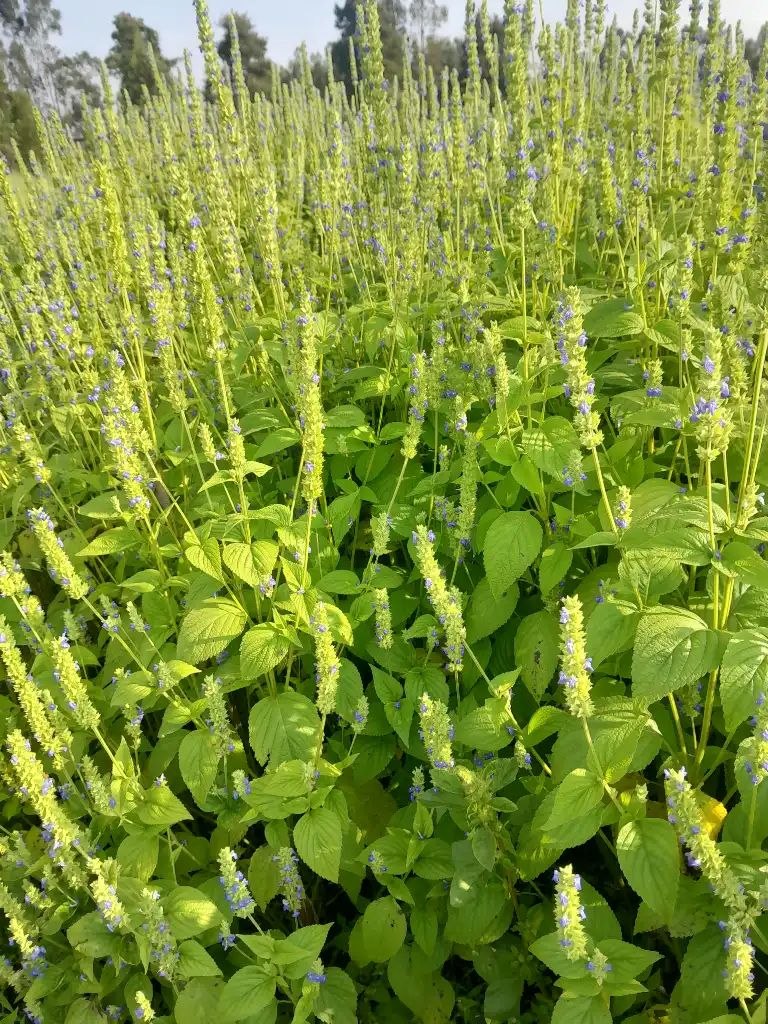
-
Method
Development process
The development process has therefore focused on identifying suitable plant resources, introducing and adapting them to Ethiopian conditions, conducting repeated cultivation and product trials, and developing products suitable for the local market.
-
Guatemala
Tea leaf introduction and adaptation
The tea leaf used for Mena Tea was introduced from Guatemala and subjected to adaptation under Ethiopian conditions. Over approximately four years, the product has undergone experimentation and improvement with the objective of developing a locally suitable product.
-
Four years
Chia cultivation trials
The same innovation approach was applied to black chia seed. Through cultivation trials on different Ethiopian soil types over approximately four years, the product has been adapted to local agricultural conditions and developed for domestic production.
-
Result
Innovation through adaptation
This represents a practical example of innovation through adaptation rather than simple importation: agricultural materials and knowledge from outside Ethiopia are tested, adapted, cultivated, improved, and transformed into locally produced products.
Mena Chia Seed
Mena Chia Seed is another major component of the MENA initiative.
Black chia seed has been cultivated in Ethiopia for approximately four years through trials conducted across different soil types and growing conditions.
The purpose of these trials has been to understand how chia can be successfully produced under Ethiopian conditions and to establish a locally adapted production base.
The seed behind this work has been selected through 15 consecutive seed cycles — no chemicals, no fertilizers.
This work has an important economic dimension because chia products previously entering the Ethiopian domestic market through imports can increasingly be substituted by locally produced chia.
The experience gained through different soil and cultivation trials can also provide a foundation for further expansion and wider farmer participation.
The initiative therefore contributes to:
- Local agricultural production
- Import substitution
- Reduction of dependence on imported products
- Foreign-exchange saving
- Agricultural diversification
- Local value addition
- Rural economic opportunities
- Development of Ethiopian-owned agrifood products
Intellectual Property and Local Ownership
An important feature of the MENA initiative is the protection and recognition of the innovation associated with the adapted tea leaf.
The tea plant material was introduced from Guatemala and subsequently adapted under Ethiopian conditions. According to the documentation supporting this submission, the Ethiopian intellectual property authority has granted ownership/intellectual property rights relating to the leaf within the relevant field.
This element is particularly relevant to the exhibition because it demonstrates that agricultural innovation can progress beyond cultivation into knowledge ownership, intellectual property, product development, and commercial value creation.
The MENA initiative therefore seeks to demonstrate not only what can be grown in Ethiopia, but also how agricultural innovation can become an Ethiopian-owned intellectual and commercial asset.
Import Substitution and Foreign-Exchange Saving
One of the strongest national-development dimensions of the MENA initiative is its contribution to import substitution.
The cultivation of Mena Chia Seed in Ethiopia provides a locally produced alternative to chia products that were previously entering the domestic market from outside the country.
This creates the potential to retain more economic value within Ethiopia and reduce the need for foreign currency to purchase products that can be produced domestically.
The same principle is reflected in the development of Mena Tea: rather than relying entirely on imported finished products, the initiative seeks to establish an Ethiopian production and value-addition chain.
This approach supports a broader development objective:
Add value locally
Brand locally
Sell locally
Create income locally
Innovation and Sustainable Agrifood Transformation
The MENA initiative reflects several dimensions of sustainable agrifood transformation.
8.1 Agricultural Innovation
The adaptation of introduced plant material to Ethiopian growing conditions demonstrates practical agricultural experimentation and innovation.
8.2 Local Production
The cultivation of chia and development of tea products establish opportunities for domestic production rather than relying solely on imported finished products.
8.3 Value Addition
The initiative moves agricultural materials beyond raw production into processing, packaging, branding, quality assessment, and market development.
8.4 Import Substitution
Locally produced chia provides an opportunity to replace part of the imported product previously supplied to the domestic market.
8.5 Foreign-Exchange Saving
Domestic production of previously imported products can reduce foreign-exchange requirements and retain economic value within the country.
8.6 Rural Economic Development
Expansion of production can create opportunities for farmers, processors, aggregators, distributors, and other participants in the agricultural value chain.
Indigenous Knowledge, Experimentation and Modern Science
The MENA initiative combines practical agricultural experience with modern product-development approaches.
The four-year cultivation and experimentation process represents practical knowledge generated through repeated observation and field experience.
At the same time, the products have been subjected to laboratory assessment, allowing traditional and practical agricultural experience to be complemented by scientific testing.
This combination can be described as:
Local experience + agricultural experimentation + scientific assessment + product development = practical agrifood innovation.
Such approaches can be particularly valuable in Ethiopia, where local farmers possess extensive knowledge of soils, crops, climate, cultivation practices, and environmental conditions.
Food, Nutrition and Healthy Lifestyle
MENA products are intended to form part of a diversified food and beverage lifestyle.
The brand promotes the concept:
BACK TO DEFAULT
This expresses the idea of reconnecting consumers with naturally sourced products and more balanced everyday habits.
Rather, MENA seeks to contribute to consumer choice through locally produced food and beverage products developed with attention to quality, safety, agricultural production, and responsible branding.
The broader vision is to encourage consumers to value:
- Locally produced foods
- Agricultural diversity
- Responsible food choices
- Quality-assessed products
- Sustainable local production
- Healthy lifestyle practices
One spoon of Mena Chia Seed + one glass of Mena Tea
Market Potential and Scalability
The MENA initiative has potential for development beyond the current scale.
Scaling the initiative would require continued agronomic research, quality-control systems, appropriate certification, market assessment, packaging development, and compliance with applicable food regulations.
Potential areas of expansion include:
Wider cultivation of chia in suitable Ethiopian production areas
Development of farmer production networks
Expansion of tea-leaf cultivation
Improved processing and packaging
Standardization of production practices
Domestic retail and institutional markets
Development of additional food and beverage products
Potential export-market exploration after meeting applicable standards
Research partnerships with agricultural and food-science institutions
Proposed Exhibition Demonstration
At the World Food Day 2026 Mini Exhibition, MENA can present the complete innovation journey through a simple and practical display.
The exhibition booth can include:
Mena Tea
Raw/adapted tea leaf · Finished tea product · Packaging and branding · Laboratory assessment results · Four-year development story
Mena Chia Seed
Black chia seed · Locally cultivated samples · Information on cultivation trials · Different soil and production experiences · Local production and import-substitution story
Innovation Journey
Introduction from Guatemala · Adaptation in Ethiopia · Four years of experimentation · Local cultivation · Processing and value addition · Laboratory assessment · Branding and market development
Intellectual Property
Supporting documentation regarding intellectual property ownership/rights · Explanation of how agricultural innovation can become locally owned intellectual property
National Economic Contribution
A simple visual message:
Why MENA Fits the World Food Day 2026 Theme
The theme “Innovate Today. Nourish Tomorrow.” is strongly reflected in the MENA experience.
The initiative demonstrates that innovation does not always begin in a laboratory or large industrial facility. It can begin with a farmer asking a practical question:
Can a product that we currently import be adapted, produced, improved, and added value to here in Ethiopia?
MENA represents an attempt to answer that question through four years of practical experimentation.
A plant introduced from Guatemala was tested and adapted to Ethiopian conditions. Chia seed was cultivated across different Ethiopian soil types. Products were developed, tested, branded, and prepared for the domestic market.
The result is an emerging model of:
Adaptation → Production → Value Addition → Quality Assessment → Import Substitution → Local Market Development
This is the type of practical innovation that can contribute to a more resilient and sustainable agrifood system.
MENA — Back to Default
MENA Tea and Mena Chia Seed represent a locally driven effort to transform agricultural experimentation into practical food and beverage products.
The initiative combines international plant resources, Ethiopian agricultural conditions, four years of experimentation, local cultivation, product development, laboratory assessment, intellectual property, branding, and market development.
Most importantly, the MENA initiative demonstrates the possibility of replacing dependence on imported products with locally adapted and locally produced alternatives, thereby creating opportunities for value addition, rural enterprise, agricultural diversification, and foreign-exchange saving.
Through its two complementary products—Mena Tea and Mena Chia Seed—MENA seeks to contribute to the vision of a stronger Ethiopian agrifood system in which innovation is not simply imported but adapted, cultivated, owned, processed, branded, and commercialized within Ethiopia.